

Should You Choose Composite or Standard Asphalt Shingles for Your Grapevine Home?
Choosing between composite and standard asphalt shingles for your Grapevine home means weighing upfront cost against long-term performance in North Texas’s punishing climate. Composite shingles cost 40-60% more than asphalt but deliver Class 4 impact resistance and 50-year lifespans that can slash insurance premiums and withstand Grapevine’s frequent hailstorms. Standard asphalt offers immediate affordability and remains the most common choice in older neighborhoods like Silverlake and Creekside, but requires replacement every 15-25 years under Dallas’s intense UV exposure and thermal cycling. The right choice depends on your home’s age, budget, and whether you prioritize initial savings or decades of storm protection. Texas Department of Insurance.
Understanding the Core Differences Between Composite and Asphalt Shingles
Standard asphalt shingles dominate Grapevine’s housing stock because they install quickly and cost less upfront. Three-tab asphalt runs $90-120 per square while architectural asphalt costs $120-180 per square. These petroleum-based products rely on fiberglass mats coated with mineral granules, making them vulnerable to granule loss from hail impact and UV degradation that accelerates cracking in North Texas summers. Composite shingles use engineered polymer resins and recycled materials to create synthetic slate or shake appearances that resist impact and UV damage far better than organic materials.. Read more about What Does Wind Damage Actually Look Like on a Shingle Roof?.
The fundamental distinction matters because Grapevine sits in North Texas’s “hail alley” where baseball-sized hail strikes every few years. Standard asphalt often requires full replacement after major hail events while Class 4-rated composite shingles can survive direct hits without leaking. This durability difference translates to insurance implications since Texas Department of Insurance (TDI) mandates impact-resistant roofing in certain hail-prone ZIP codes. How Much a Full Roof Replacement Really Costs in the Dallas Area.
Composite Shingles: Premium Performance for North Texas Weather
Composite shingles represent the evolution of roofing materials engineered specifically for extreme weather performance. Brands like DaVinci Roofscapes and Brava Roof Tile manufacture polymer-based products that mimic natural slate or cedar shake appearances while delivering superior impact resistance. These materials undergo rigorous testing including UL 2218 impact resistance certification where steel balls drop from increasing heights until failure occurs. The Benefits of TPO Roofing Systems for Richardson Industrial Properties.
The Class 4 impact rating means composite shingles withstand 2-inch steel ball impacts without cracking – equivalent to large hailstone impacts that would destroy standard asphalt. This rating matters in Grapevine where TDI tracks hail claims by ZIP code and insurers often require impact-resistant materials for new construction in high-risk areas. Beyond impact resistance, composite shingles reflect more solar radiation than asphalt, reducing heat absorption that drives attic temperatures above 150°F during Dallas summers.
Installation requires specialized techniques since composite materials weigh 200-300 pounds per square compared to 200-250 pounds for asphalt. The polymer composition demands specific underlayment and fastening patterns to prevent thermal expansion damage. Professional installation by certified contractors ensures warranty coverage from manufacturers who guarantee products for 50 years against manufacturing defects and impact damage.
Standard Asphalt Shingles: The Affordable Dallas Standard
Asphalt shingles remain Grapevine’s most popular choice because they balance cost with acceptable performance for most homeowners. Three-tab asphalt provides the lowest upfront cost at $90-120 per square while architectural asphalt delivers better wind resistance and aesthetic depth at $120-180 per square. Both types use similar manufacturing processes involving fiberglass mats saturated with asphalt and coated with ceramic granules for UV protection.
The affordability factor drives asphalt’s dominance in neighborhoods like Silverlake and Creekside where home values range from $300,000 to $500,000. Installation crews can complete asphalt roofs in 1-2 days compared to 2-3 days for composite materials, reducing labor costs that often equal material expenses. The familiar appearance also appeals to homeowners who prefer traditional aesthetics over synthetic alternatives.
However, asphalt’s limitations become apparent during North Texas’s extreme weather cycles. Hail damage creates bruising that leads to granule loss and accelerated deterioration. UV exposure breaks down asphalt binders causing curling and cracking that allows water infiltration. The 15-25 year lifespan means replacement costs accumulate faster than composite’s 50-year durability, though the lower initial investment appeals to budget-conscious homeowners planning shorter ownership periods.
Head-to-Head Comparison: Performance Metrics That Matter in Grapevine
Performance differences between composite and asphalt shingles become critical when evaluating North Texas’s specific challenges. Hail resistance represents the most significant factor since Grapevine experiences multiple hailstorms annually with stones reaching golf ball size or larger. Class 4 impact resistance in composite shingles provides insurance-approved protection that standard asphalt cannot match without premium upgrades. Choosing Between the Most Trusted Roofing Companies in the Dallas Metroplex.
Wind resistance also varies significantly between materials. Standard asphalt shingles typically carry 60-130 mph wind ratings depending on installation quality and architectural style. Composite shingles achieve 110-130 mph ratings consistently due to their polymer flexibility and specialized fastening systems. This difference matters during North Texas’s frequent straight-line wind events that can exceed 100 mph in severe thunderstorms.
Heat performance affects energy efficiency and material longevity. Dallas summers subject roofs to 100+ degree temperatures for months, causing thermal expansion and contraction that stresses roofing materials. Composite shingles reflect more solar radiation than asphalt, reducing heat absorption that drives cooling costs and material degradation. The polymer composition also resists warping and cracking from thermal cycling that damages organic asphalt over time. Roofing Balch Springs.
| Performance Factor | Composite Shingles | Standard Asphalt |
|---|---|---|
| Hail Resistance | Class 4 (2-inch steel ball) | Class 3 or lower |
| Wind Rating | 110-130 mph | 60-130 mph |
| Lifespan (Dallas) | 40-50 years | 15-25 years |
| Heat Reflection | High (cool roof eligible) | Low |
| Initial Cost | $300-450 per square | $90-180 per square |
Dallas Weather Impact: Why Material Choice Matters More Here
North Texas’s climate creates unique challenges that make material selection crucial for Grapevine homeowners. The region experiences extreme UV exposure with 230+ sunny days annually, causing accelerated degradation of organic roofing materials. Dallas’s summer heat often exceeds 100°F for weeks, creating thermal expansion that stresses roof components and accelerates material breakdown.
Hail represents the most destructive weather factor, with Grapevine sitting in the heart of North Texas’s hail alley. The National Weather Service documents multiple hailstorms annually with stones reaching 2 inches or larger – sufficient to puncture standard asphalt shingles and cause immediate leaks. Class 4 impact resistance becomes essential insurance protection since TDI tracks hail claims by ZIP code and insurers often require impact-resistant materials in high-risk areas. National Weather Service.
Wind events compound roofing challenges during spring and fall storm seasons. North Texas experiences frequent straight-line winds exceeding 70 mph, with severe thunderstorms producing gusts over 100 mph. Standard asphalt shingles require specific installation techniques including enhanced nailing patterns and starter strips to achieve maximum wind ratings. Composite materials inherently resist wind damage through polymer flexibility and superior fastening systems.
Temperature fluctuations cause expansion and contraction cycles that stress roofing materials differently. Dallas experiences 40-50 degree temperature swings common during spring and fall, causing materials to expand and contract repeatedly. Composite polymers handle these cycles better than asphalt, which becomes brittle in cold temperatures and soft in extreme heat. This thermal cycling affects not just shingles but also flashing, underlayment, and sealant performance.
Cost Analysis: Breaking Down the Numbers for Grapevine Homeowners
Initial material costs create the most obvious difference between composite and asphalt shingles. Composite materials cost $300-450 per square installed compared to $90-180 per square for standard asphalt. This 200-300% price premium reflects the engineered polymer composition, impact resistance testing, and extended warranty coverage that composite products provide.
Labor costs also differ significantly since composite installation requires specialized techniques and longer installation times. Standard asphalt crews can complete most homes in 1-2 days while composite installation takes 2-3 days due to material handling requirements and specific fastening patterns. The weight difference – composite shingles weigh 200-300 pounds per square versus 200-250 pounds for asphalt – affects crew size and equipment needs.
However, lifecycle cost analysis often favors composite materials despite higher upfront investment. The 40-50 year lifespan compared to 15-25 years for asphalt means composite homeowners replace roofs once versus two to three times over the same period. This longevity advantage becomes more pronounced when factoring North Texas’s severe weather patterns that often destroy standard asphalt during major hail events.
Insurance considerations add another cost dimension since Texas Department of Insurance (TDI) tracks hail claims by ZIP code and insurers often require impact-resistant materials in high-risk areas. Class 4 composite shingles can qualify for insurance premium discounts of 5-15% in Grapevine’s hail-prone ZIP codes. Some insurers also offer replacement cost coverage for composite materials that exceeds standard asphalt coverage limits.
Local Verdict: Which Material Works Best for Your Grapevine Home?
Composite shingles make the most sense for Grapevine homeowners prioritizing long-term protection and energy efficiency. The Class 4 impact resistance provides peace of mind during North Texas’s frequent hailstorms, while the 40-50 year lifespan eliminates replacement costs that accumulate with standard asphalt. Energy efficiency benefits from superior heat reflection can reduce cooling costs by 10-15% during Dallas summers, providing ongoing utility savings.
Standard asphalt remains the better choice for budget-conscious homeowners or those planning shorter ownership periods. The $90-180 per square cost allows roof replacement within most home improvement budgets, while the familiar appearance appeals to traditional aesthetic preferences. Neighborhoods like Silverlake and Creekside feature predominantly asphalt roofs where matching existing homes maintains neighborhood character and potentially satisfies HOA requirements.
Consider your specific circumstances when making this decision. New construction or major renovations justify composite investment since the extended lifespan maximizes return on investment. Existing homes with 15+ year old roofs facing replacement should evaluate composite if hail damage risk and energy efficiency matter more than initial cost savings. Homes in established neighborhoods with strict HOA guidelines may require asphalt to maintain architectural consistency.
Professional installation quality ultimately determines both material types’ performance regardless of your choice. North Texas’s extreme weather demands proper underlayment, flashing, and ventilation systems that protect your investment. Whether choosing composite or asphalt, select contractors certified by material manufacturers and familiar with Dallas building codes and TDI requirements for impact-resistant roofing.
Frequently Asked Questions
Will composite shingles increase my home’s resale value in Grapevine?
Composite shingles can boost resale appeal by offering buyers long-term protection and energy efficiency. The 40-50 year lifespan and Class 4 hail resistance appeal to quality-conscious buyers, though the premium cost may not fully translate to dollar-for-dollar value increases. Focus on marketing the durability and insurance benefits rather than expecting direct cost recovery.
Do I need special permits for composite shingle installation in Grapevine?
Yes, both composite and asphalt installations require permits through Grapevine’s building department. Composite materials may need additional documentation showing Class 4 impact resistance certification and compliance with Texas Department of Insurance (TDI) requirements for hail-prone areas. Professional contractors handle permit acquisition and ensure installations meet local building codes.
How long does installation take for each material type?
Standard asphalt typically installs in 1-2 days for average homes while composite materials require 2-3 days due to specialized handling and fastening requirements. Weather delays affect both materials equally in North Texas, though composite’s polymer composition handles temperature extremes better during installation than asphalt’s temperature sensitivity.
[IMAGE_PLACEHOVER_1]
Diagram comparing hail impact resistance testing between Class 3 asphalt and Class 4 composite shingles, showing steel ball drop heights and resulting damage patterns.
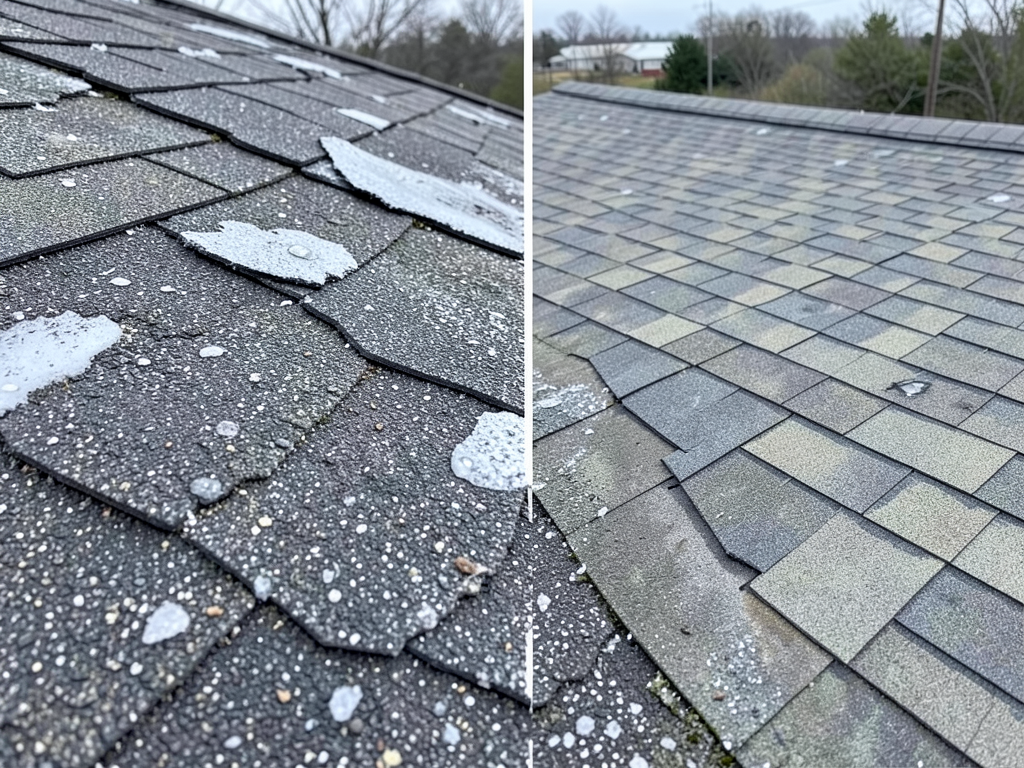
Photo of a Grapevine home after a major hailstorm, showing undamaged composite roof next to severely damaged standard asphalt roof across the street.
Installation crew applying specialized underlayment and fastening patterns for composite shingles on a steep-pitch Grapevine roof, demonstrating proper North Texas installation techniques.
Ready to Make the Right Choice for Your Grapevine Home?
Don’t let hail season catch you unprepared. Whether you choose the long-term protection of composite shingles or the affordable reliability of standard asphalt, professional installation makes all the difference in North Texas’s extreme climate. Our team understands Grapevine’s unique weather challenges and can help you select the right material for your home’s specific needs.
Call (214) 204-2077 today to schedule your free roof inspection and get expert advice on which shingle type delivers the best protection and value for your Grapevine home. Don’t wait until the next storm – protect your investment now. Why a Pre-Storm Roof Inspection is Vital for Every Lake Highlands Homeowner.
Pick up the phone and call (214) 204-2077 before the next hail storm hits. Your home deserves the right protection for North Texas weather.
{
“@context”: “https://schema.org”,
“@type”: “BlogPosting”,
“headline”: “Should You Choose Composite or Standard Asphalt Shingles for Your Grapevine Home?”,
“description”: “Dallas homeowners face unique hail and heat challenges. Learn how composite vs. asphalt shingles perform in North Texas and what makes the best investment for your roof.”,
“wordCount”: 2053,
“datePublished”: “2026-03-21T09:47:00.000Z”,
“dateModified”: “2026-03-21T09:47:00.000Z”,
“inLanguage”: “en-US”,
“mainEntityOfPage”: {
“@type”: “WebPage”,
“@id”: “https://grandroofingdallas.com”
},
“publisher”: {
“@type”: “LocalBusiness”,
“name”: “Grand Roofing Dallas”,
“url”: “https://grandroofingdallas.com”
},
“author”: {
“@type”: “Organization”,
“name”: “Grand Roofing Dallas”,
“url”: “https://grandroofingdallas.com”
},
“image”: {
“@type”: “ImageObject”,
“url”: “https://grandroofingdallas.com/wp-content/uploads/2026/03/should-you-choose-composite-or-standard-asphalt-sh-1.png”
}
}
{
“@context”: “https://schema.org”,
“@type”: “RoofingContractor”,
“name”: “Grand Roofing Dallas”,
“url”: “https://grandroofingdallas.com”,
“address”: {
“@type”: “PostalAddress”,
“addressLocality”: “Dallas”
},
“areaServed”: {
“@type”: “City”,
“name”: “Dallas”
}
}
{
“@context”: “https://schema.org”,
“@type”: “FAQPage”,
“mainEntity”: [
{
“@type”: “Question”,
“name”: “Local Verdict: Which Material Works Best for Your Grapevine Home?”,
“acceptedAnswer”: {
“@type”: “Answer”,
“text”: “Composite shingles make the most sense for Grapevine homeowners prioritizing long-term protection and energy efficiency. The Class 4 impact resistance provides peace of mind during North Texas’s frequent hailstorms, while the 40-50 year lifespan eliminates replacement costs that accumulate with standard asphalt. Energy efficiency benefits from superior heat reflection can reduce cooling costs by 10-15% during Dallas summers, providing ongoing utility savings.”
}
},
{
“@type”: “Question”,
“name”: “Will composite shingles increase my home’s resale value in Grapevine?”,
“acceptedAnswer”: {
“@type”: “Answer”,
“text”: “Composite shingles can boost resale appeal by offering buyers long-term protection and energy efficiency. The 40-50 year lifespan and Class 4 hail resistance appeal to quality-conscious buyers, though the premium cost may not fully translate to dollar-for-dollar value increases. Focus on marketing the durability and insurance benefits rather than expecting direct cost recovery.”
}
},
{
“@type”: “Question”,
“name”: “Do I need special permits for composite shingle installation in Grapevine?”,
“acceptedAnswer”: {
“@type”: “Answer”,
“text”: “Yes, both composite and asphalt installations require permits through Grapevine’s building department. Composite materials may need additional documentation showing Class 4 impact resistance certification and compliance with Texas Department of Insurance (TDI) requirements for hail-prone areas. Professional contractors handle permit acquisition and ensure installations meet local building codes.”
}
},
{
“@type”: “Question”,
“name”: “How long does installation take for each material type?”,
“acceptedAnswer”: {
“@type”: “Answer”,
“text”: “Standard asphalt typically installs in 1-2 days for average homes while composite materials require 2-3 days due to specialized handling and fastening requirements. Weather delays affect both materials equally in North Texas, though composite’s polymer composition handles temperature extremes better during installation than asphalt’s temperature sensitivity.”
}
},
{
“@type”: “Question”,
“name”: “Ready to Make the Right Choice for Your Grapevine Home?”,
“acceptedAnswer”: {
“@type”: “Answer”,
“text”: “Don’t let hail season catch you unprepared. Whether you choose the long-term protection of composite shingles or the affordable reliability of standard asphalt, professional installation makes all the difference in North Texas’s extreme climate. Our team understands Grapevine’s unique weather challenges and can help you select the right material for your home’s specific needs.”
}
}
]
}
{
“@context”: “https://schema.org”,
“@type”: “BreadcrumbList”,
“itemListElement”: [
{
“@type”: “ListItem”,
“position”: 1,
“name”: “Home”,
“item”: “https://grandroofingdallas.com”
},
{
“@type”: “ListItem”,
“position”: 2,
“name”: “Blog”,
“item”: “https://grandroofingdallas.com/blog”
},
{
“@type”: “ListItem”,
“position”: 3,
“name”: “Should You Choose Composite or Standard Asphalt Shingles for Your Grapevine Home?”
}
]
}
{
“@context”: “https://schema.org”,
“@type”: “Service”,
“serviceType”: “Roofing”,
“provider”: {
“@type”: “LocalBusiness”,
“name”: “Grand Roofing Dallas”,
“url”: “https://grandroofingdallas.com”
},
“areaServed”: {
“@type”: “City”,
“name”: “Dallas”
},
“description”: “Dallas homeowners face unique hail and heat challenges. Learn how composite vs. asphalt shingles perform in North Texas and what makes the best investment for your roof.”
}