


menu

Nail Pop Repair in Dallas – Expert Solutions for Persistent Shingle Fastener Issues

Grand Roofing Dallas specializes in diagnosing and permanently fixing roof nail pops caused by Dallas's extreme temperature swings, eliminating recurring leaks and preventing structural damage to your shingle system.

Slider Image 1
Slider Image 2
Slider Image 3
Slider Image 4
Slider Image 5
Slider Image 7
Slider Image 8
Slider Image 9
Slider Image 10
Slider Image 11

Why Dallas Roofs Suffer From Chronic Nail Pop Problems

You walk into your attic and notice small bumps dotting your shingles from below. Or you spot shingles lifting at the edges after a windstorm. These are nail pops, and they are not random.

Dallas's violent temperature swings create the perfect conditions for this failure. Summer roof surface temperatures exceed 160 degrees. Winter nights drop to freezing. This daily expansion and contraction cycle works fasteners loose over time. The decking expands, the nail shaft loosens, and eventually the fastener backs out, pushing the shingle upward.

Clay soil movement adds another layer of stress. As the ground shifts beneath your foundation, the entire structure flexes. This subtle movement translates to your roof deck, where nails experience lateral forces they were never designed to handle. Fixing roof nail pops requires understanding these local forces.

Older homes in neighborhoods like Lakewood and Oak Cliff see this more frequently. Original construction often used smooth-shank nails instead of ring-shank fasteners. Smooth shanks have minimal holding power once the wood fibers relax. One popped nail creates a weak point. Wind gets under the shingle edge. Water follows. The problem spreads.

Shingle nail pop repair is not cosmetic. Each protruding fastener punctures the overlapping shingle above it. Rain channels directly through that hole into your decking. You might not see the leak inside for months, but the rot clock is ticking. Repairing popped roofing nails early prevents costly sheathing replacement later.

The bumps you see today represent failures that started years ago. Dallas's climate does not give roofs a break.

Why Dallas Roofs Suffer From Chronic Nail Pop Problems
How We Permanently Solve Nail Backout Failures

How We Permanently Solve Nail Backout Failures

Most contractors slap sealant over the bump and call it fixed. That approach fails within one season. We address the root cause.

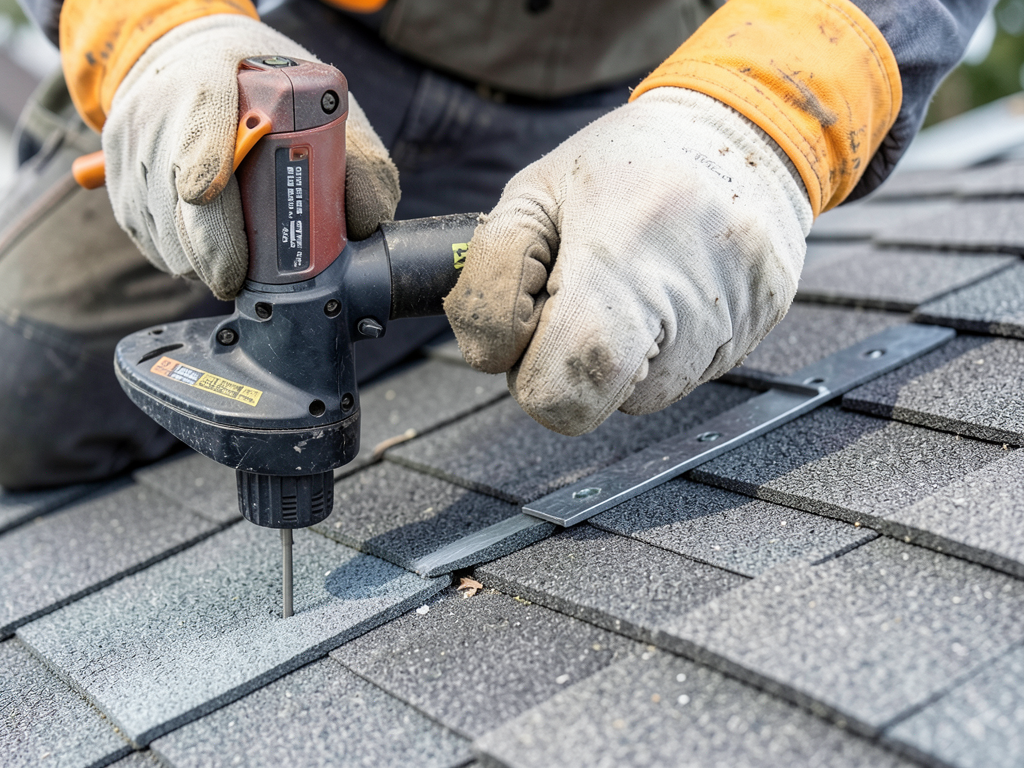
First, we remove the affected shingle without tearing the surrounding material. This requires careful lifting and releasing the sealant bond without damaging the mat. Once exposed, we extract the failed fastener completely. Leaving it in place creates a future leak path, even if you drive it flush.

Next, we inspect the decking hole. If the wood fibers are compressed or the hole is oversized, we relocate the fastener two inches from the original penetration. Driving a new nail into damaged wood guarantees another failure. We use ring-shank nails exclusively for roof nail backout repair. The spiral threading grips the wood fibers and resists withdrawal forces far better than smooth shanks.

For widespread failures across multiple shingles, we assess whether thermal movement or structural settling is the driver. If your roof deck is insufficiently fastened to the trusses, we address that deficiency. Adding clips or screws at the truss-to-deck connection stabilizes the substrate and prevents future movement.

We also check fastener placement. Nails driven too high on the shingle do not compress the mat properly. Nails driven at an angle create weak points. Both issues cause premature backout. Reseating popped roof nails means doing it right the first time, in the nailing zone specified by the manufacturer.

After fastening, we apply a dab of roofing cement under the shingle edge and reseal the bond. This is the final step, not the only step. The repair is invisible from the ground and stronger than the original installation.

What Happens During a Nail Pop Repair Visit

Nail Pop Repair in Dallas – Expert Solutions for Persistent Shingle Fastener Issues
01

Roof Surface Inspection

We walk your entire roof surface to identify every raised fastener and compromised shingle. Many nail pops hide under debris or occur in clusters along rake edges and ridge lines. We mark each location and photograph the damage. You get a full condition report before any work begins, so you understand the scope and cause.
02

Fastener Extraction and Replacement

Each failed nail gets pulled, not hammered down. We lift the overlapping shingle carefully, extract the old fastener, and install a new ring-shank nail in virgin decking. If the surrounding shingles show stress cracks or mat deterioration, we replace them during this step. Proper nailing technique and correct placement in the nailing strip ensure long-term holding power.
03

Seal and Quality Check

After all fasteners are seated, we apply roofing cement under lifted shingle edges and press them flat. We verify every repair from ground level using binoculars to confirm no bumps remain. You receive photos of the completed work and a written summary of what was repaired. The roof looks uniform again, and the leak risk is eliminated.

Why Grand Roofing Dallas Gets Nail Pop Repairs Right

Nail pop repair looks simple until you do it wrong. We have repaired hundreds of botched attempts where contractors hammered protruding nails flush and walked away. That approach crushes the shingle mat, creates a permanent weak spot, and does nothing to address why the fastener backed out in the first place.

We understand Dallas roof systems. The combination of thermal cycling, UV degradation, and clay soil movement creates failure patterns you do not see in other climates. Our crews recognize the difference between isolated fastener failure and systemic deck movement. That distinction determines whether you need spot repairs or a broader structural fix.

Grand Roofing Dallas uses the correct materials for every repair. We stock ring-shank nails in multiple lengths to match your decking thickness. We carry manufacturer-approved sealants that remain flexible through temperature extremes. Cheap roofing cement hardens and cracks within months. Our materials last.

We also understand local building codes. Dallas requires specific fastener schedules in high-wind zones. If your original installation did not meet those requirements, we bring it up to code during the repair. That protects you during the next storm and ensures your insurance coverage remains valid.

Our crews work year-round in Dallas heat. We know how shingle sealant bonds behave at 95 degrees versus 65 degrees. We adjust our technique based on roof surface temperature to avoid tearing the mat. This attention to environmental conditions separates professional work from hack jobs.

You also get transparency. We explain what failed, why it failed, and what we did to fix it. No upselling. No scare tactics. Just honest diagnosis and competent repair. Most nail pop jobs take half a day. You get your roof back in service quickly, with confidence the problem will not return.

What You Can Expect From Our Repair Process

Same-Week Scheduling

We schedule roof inspections within three business days of your call. Most nail pop repairs are completed during the first visit if the damage is limited to a single roof plane. Larger jobs involving multiple elevations or widespread fastener failure may require a second day. We provide a time estimate after the initial inspection so you can plan accordingly. Our crews arrive on time and work efficiently to minimize disruption.

Detailed Roof Assessment

Before we touch a single shingle, we document every nail pop and check for related issues like flashing separation or granule loss. We take photos from multiple angles and note patterns that suggest underlying problems. If we find evidence of deck movement or truss deflection, we explain those findings clearly and recommend solutions. You get a written summary of what we found, what needs immediate attention, and what can wait.

Invisible, Lasting Repairs

When we finish, you should not be able to identify the repaired areas from the ground. We match shingle alignment, ensure uniform sealant coverage, and verify that no fasteners protrude above the surface. The repairs withstand Dallas wind and rain because we use proper fastening techniques and quality materials. You are not paying for a temporary patch. You are paying for a fix that lasts until the roof needs replacement.

Post-Repair Documentation

You receive photos of the completed work and a summary of all repairs performed. This documentation is useful if you sell the home or file an insurance claim later. We also provide guidance on monitoring your roof for future issues. Nail pops sometimes indicate broader problems that develop over years. Knowing what to watch for helps you catch the next issue early, before it becomes expensive.

Frequently Asked Questions

You Have Questions,
We Have Answers

Can nail pops be fixed? +

Yes, nail pops can be fixed. The repair involves removing the protruding nail, securing the drywall with screws placed about two inches from the original pop, and covering the area with joint compound. In Dallas homes, nail pops happen when framing lumber shifts due to our clay soil movement and temperature swings. A proper fix requires three coats of compound, sanding between each layer, then priming and painting to match your wall. The repair is straightforward, but recurring pops signal a deeper framing issue that needs attention before you keep patching the same spots.

How much does it cost to fix a nail pop? +

Nail pop repair typically costs between drywall patching rates and ceiling repair pricing in Dallas. The final price depends on how many pops you have, ceiling height, and whether texture matching is required. A single nail pop repair runs lower than fixing multiple pops across a room. If you need extensive repairs after foundation settlement, which is common in Dallas due to our expansive clay soils, expect higher costs. Most contractors charge per repair or by the room. The price includes fastener replacement, compound application, sanding, and paint matching.

Can you hammer nail pops back in? +

Hammering nail pops back in does not work. The nail will pop out again because the drywall paper is already torn and the fastener has lost its holding power. Dallas homes experience constant foundation micro-movements from soil expansion and contraction, which means that nail will push back through. The correct fix involves removing the failed nail completely, driving two screws into solid framing above and below the pop location, then filling and finishing the holes. Hammering creates a temporary cosmetic fix that fails within weeks or months.

Can you leave nail pops? +

You can leave nail pops, but they will worsen over time. In Dallas, where foundation movement from clay soil is constant, a small bump today becomes a larger crack tomorrow. Leaving nail pops allows moisture infiltration behind the drywall, which leads to paper deterioration and potential mold growth in our humid climate. The protruding nail head also continues to push outward as framing lumber expands and contracts with temperature changes. What starts as a cosmetic nuisance turns into a structural drywall problem requiring more extensive repairs if ignored.

Is it safe to ignore nail pops? +

Ignoring nail pops is not safe if they indicate active foundation movement or structural settling. A few isolated pops in a Dallas home are normal after construction, but clusters of pops appearing suddenly signal ongoing foundation issues common to our expansive soils. These need professional evaluation. Ignored pops allow drywall damage to spread, creating larger repair bills later. The real danger is not the nail pop itself but what caused it. If your home is actively shifting, ignoring the warning signs leads to cracked walls, stuck doors, and compromised structural integrity.

Does insurance cover nail pops? +

Insurance rarely covers nail pops because they result from normal settling, which is considered maintenance, not sudden damage. In Dallas, where foundation movement from clay soil is expected, insurers view nail pops as wear and tear. However, if nail pops appear after a covered event like hail damage to your roof or a plumbing leak that caused sudden foundation shift, your claim might include the repairs. Document the timeline and cause. Most homeowners pay out of pocket for nail pop repairs unless you can prove direct connection to a specific insured peril.

When to worry about nail pops? +

Worry about nail pops when they appear in clusters, happen suddenly across multiple rooms, or return after repair. In Dallas homes, a few pops during the first year are normal as framing lumber dries and settles. Concern arises when pops form diagonal crack patterns, concentrate near corners, or align with stuck doors and windows. These patterns indicate active foundation movement from our shifting clay soils. Multiple pops appearing after heavy rain or drought signal foundation problems requiring immediate evaluation. Isolated pops are cosmetic. Patterned pops are structural warnings.

Who to call to fix nail pops? +

Call a qualified drywall contractor or handyman for isolated nail pop repairs in Dallas. For multiple pops or recurring issues, contact a foundation specialist first to rule out structural problems common to our clay soil conditions. A roofer should evaluate pops appearing after storms to check for roof decking movement. If pops cluster near plumbing areas, call a plumber to check for leaks causing settlement. For whole-home issues, start with a foundation inspection before patching cosmetic symptoms. The right professional depends on whether you are treating the symptom or the cause.

How do contractors fix nail pops? +

Contractors fix nail pops by removing the failed fastener, installing two drywall screws into solid framing lumber above and below the original location, then applying three coats of joint compound. Each coat gets sanded smooth before the next application. After final sanding, the area is primed and painted to match your existing wall. In textured Dallas homes, contractors also replicate knockdown or orange peel patterns. Quality contractors use screws instead of nails because screws resist the constant foundation micro-movements our clay soils cause. The repair typically takes two to three days for proper curing.

Why do nail pops keep coming back? +

Nail pops keep returning because the underlying cause was not fixed. In Dallas, the main culprit is expansive clay soil that shifts with moisture changes, moving your foundation and flexing framing lumber. If a contractor only patches the surface without addressing foundation movement, pops reappear. Other causes include lumber that is still drying out, improper fastener spacing during original construction, or using nails instead of screws. Recurring pops in the same locations mean either the repair used nails again or active foundation issues continue stressing your framing. Fix the foundation, then fix the drywall.

How Dallas Temperature Extremes Accelerate Nail Backout Failures

Dallas roofs endure some of the harshest thermal cycling in the country. Summer surface temperatures routinely hit 160 degrees, causing wood decking and metal fasteners to expand. Overnight cooling contracts those same materials. This daily expansion and contraction loosens nail grip over time, especially in roofs installed during cooler months when the wood was contracted. The fasteners work their way up through the shingle, creating the characteristic bump. Homes in older neighborhoods like Lakewood, with original 1950s construction, see this more frequently because builders used smooth-shank nails that lack the holding power of modern ring-shank fasteners.

Choosing a local contractor for nail pop repair matters because we understand these climate-specific failure modes. Grand Roofing Dallas has repaired thousands of popped fasteners across the metro. We know which neighborhoods see higher failure rates due to soil movement and which roofing products hold up best under thermal stress. We also stay current with Dallas building codes, which specify fastener types and placement for wind resistance. A contractor from outside the area may not recognize the signs of clay soil settlement or understand how to anchor repairs in expansive soil conditions.
Roofing Services in The Dallas Area

Grand Roofing Dallas proudly serves the entire metropolitan area and surrounding communities. We're committed to providing prompt, professional service wherever you are. Use the map to see our location and service radius, or simply give us a call to schedule an in-person consultation at your property. We look forward to bringing our expert roofing solutions directly to you.

Address:
Grand Roofing Dallas, 4422 Live Oak St, Dallas, TX, 75204

Additional Services We Offer

Our news updates

Latest Articles & News from The Blogs

How to Spot Storm Chasing Roofing Scams Before They Knock on Your Dallas Door North Texas homeowners face a predictable…

How to Spot Storm Chasing Roofing Scams Before They Knock on Your Dallas Door

How to Spot Storm Chasing Roofing Scams Before They Knock on Your Dallas Door North Texas homeowners face a predictable…

Why the Dead Valleys on Your Highland Park Estate are Prone to Leaking

Why the Dead Valleys on Your Highland Park Estate are Prone to Leaking Dead valleys on Highland Park estates collect…

Navigating HOA Roof Requirements for Your New Home in Stonebridge Ranch

Understanding Stonebridge Ranch HOA Roofing Requirements Moving into Stonebridge Ranch means joining a community where the Stonebridge Ranch Community Association…

Contact Us

Nail pops do not fix themselves. Each protruding fastener is a future leak. Call Grand Roofing Dallas at (214) 204-2077 to schedule an inspection. We will assess the damage, explain your options, and get your roof sealed before the next storm.