
Living in the M Streets means your home’s drainage system faces unique challenges. The historic charm of your 1920s bungalow deserves an exterior that matches its character, but Dallas’s heavy spring storms and expansive clay soil demand practical solutions. Rain chains offer an elegant alternative to traditional downspouts, but do they provide enough protection for your foundation and landscaping?
This guide breaks down the real-world performance of rain chains versus downspouts specifically for M Streets homes. We’ll examine how each system handles Dallas’s intense rainfall, their impact on your home’s foundation, and which option delivers the best balance of curb appeal and function for your historic property.
Understanding Rain Chains: Aesthetics and Functionality
Rain chains originated in Japan centuries ago as decorative alternatives to closed downspouts. These open chains guide water visibly from your gutter to the ground, creating a waterfall effect during storms. For M Streets bungalows with their Arts and Crafts details and Craftsman influences, rain chains can enhance your home’s architectural character.
The visual appeal is undeniable. Copper rain chains develop a beautiful patina over time that complements the warm tones of many M Streets homes. During light rain, water cascades down the chain links, creating a soothing sound and visual display that transforms a functional element into a design feature.
However, rain chains have significant limitations in Dallas’s climate. The open design means water splashes more readily during high winds, which are common during North Texas thunderstorms. A typical rain chain handles about 5-15 gallons per minute, while Dallas’s most intense storms can produce rainfall rates exceeding 4 inches per hour. This means a 2,000-square-foot roof can generate over 1,200 gallons of water per hour during peak rainfall. Texas A&M Soil Testing Laboratory.
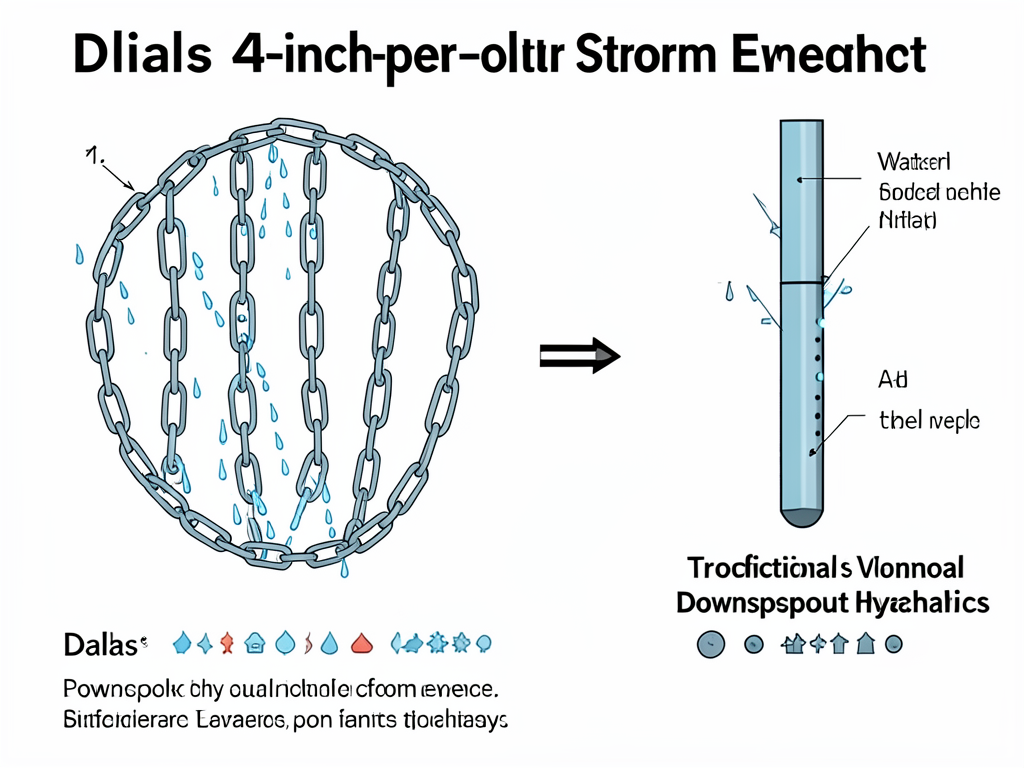
– Technical diagram showing rain chain water flow patterns versus traditional downspout hydraulics during Dallas’s typical 4-inch-per-hour storm event.
Traditional Downspouts: The Workhorse of Texas Drainage
Traditional downspouts remain the standard for North Texas homes because they work. These closed pipes efficiently channel water from your roof to the ground, even during Dallas’s most severe storms. A properly sized 3×4-inch downspout can handle 180 gallons per minute, more than enough capacity for even the heaviest downpours recorded in Dallas County.
The engineering behind downspouts addresses Dallas’s specific challenges. The closed design prevents wind-driven water from escaping the system, keeping your siding dry and preventing water from pooling near your foundation. This matters because Dallas’s expansive clay soil can swell up to 10% when saturated, creating pressure against foundation walls that leads to cracks and structural damage.
Modern downspouts offer more than basic functionality. Today’s options include decorative elbows, rain barrels for water harvesting, and various finishes that can complement your bungalow’s exterior. The key advantage remains their reliability during North Texas’s unpredictable weather patterns, where storms can dump several inches of rain in under an hour.
Direct Comparison: Capacity, Durability, and Maintenance
| Feature | Rain Chains | Traditional Downspouts |
|---|---|---|
| Flow Capacity | 5-15 GPM | 180 GPM (3×4") |
| Wind Performance | Poor – water splashes | Excellent – closed system |
| Foundation Protection | Minimal – requires catch basin | Superior – controlled discharge |
| Maintenance Needs | High – debris clogs easily | Low – debris flows through |
| Lifespan in Texas Heat | 5-10 years (aluminum) | 20-30 years (aluminum) |
| Curb Appeal Score | 9/10 | 6/10 |
The numbers tell the story. While rain chains score high on aesthetics, their performance during Dallas’s severe weather leaves much to be desired. The 12:1 capacity difference means rain chains struggle during the exact conditions when proper drainage matters most.
The Dallas Weather Factor: Handling Heavy Rainfall and Hail
Dallas experiences some of the most intense rainfall patterns in the country. Spring thunderstorms can produce rainfall rates of 3-5 inches per hour, overwhelming drainage systems that work fine in milder climates. The National Weather Service records show Dallas County averages 37 thunderstorm days annually, with many producing rainfall exceeding what rain chains can handle. National Weather Service Dallas rainfall data.
Hail adds another layer of complexity. While rain chains are generally hail-resistant, the debris they create when struck can clog the system. Traditional downspouts handle hail better since debris flows through the closed system. The impact also matters – hail can dent aluminum rain chains, affecting their appearance and function over time.
Wind-driven rain presents the biggest challenge for rain chains. During a typical North Texas storm, winds can exceed 40 mph, causing water to blow sideways and escape from open rain chains. This creates several problems: water hits your siding causing stains and potential rot, pools near your foundation, and creates icy patches in winter.
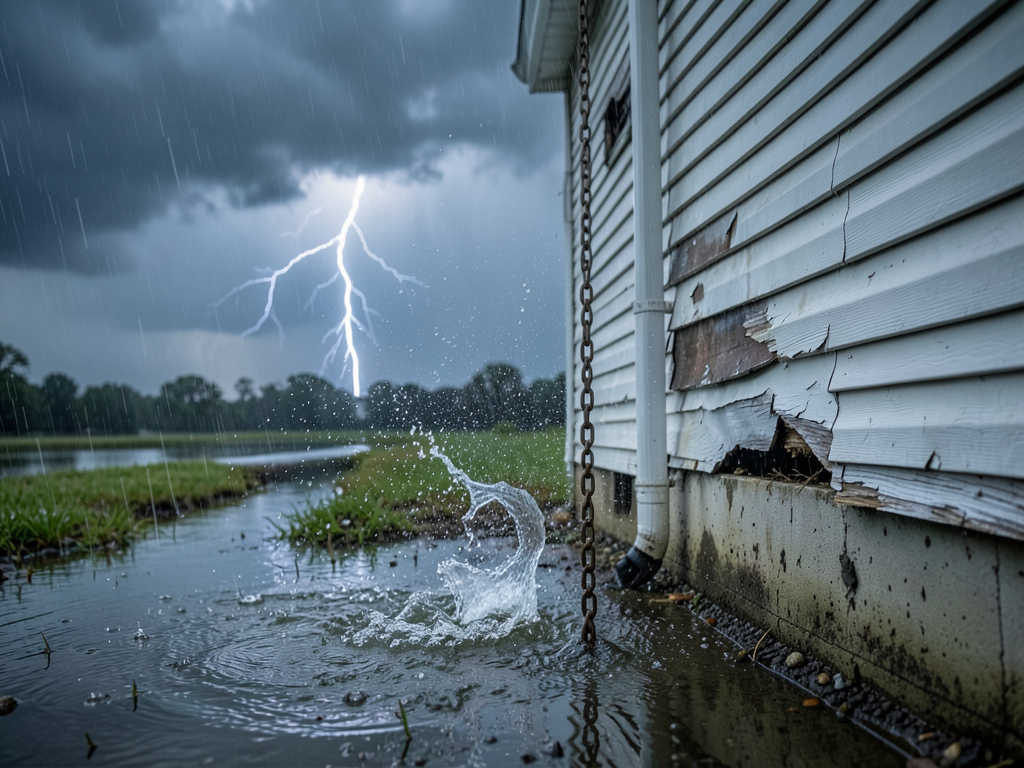
– Photo showing water splashing from a rain chain during a Dallas thunderstorm, with visible damage to siding and pooling near foundation.
Foundation Protection: Why Drainage Matters in North Texas Soil
Dallas sits on expansive clay soil that expands when wet and contracts when dry. This movement creates foundation problems that cost homeowners thousands in repairs. The Texas A&M Soil Testing Laboratory identifies Dallas-area soil as having high plasticity index, meaning it changes volume dramatically with moisture content.
Proper drainage becomes critical. The International Residential Code requires downspouts to discharge water at least 5 feet from the foundation. For homes on expansive clay, many engineers recommend 10-foot extensions or underground drainage systems. Rain chains alone cannot meet these requirements without significant additional infrastructure.
The physics are straightforward: water near your foundation creates hydrostatic pressure that can crack concrete and shift your home. Dallas’s clay soil holds water like a sponge, maintaining pressure for weeks after a storm. Traditional downspouts with proper extensions keep this water away from your home’s most vulnerable areas.
Testing your current drainage involves simple observation. During the next heavy rain, watch where water flows from your roof. If it pools within 5 feet of your foundation or creates erosion patterns, your system needs improvement regardless of whether you choose rain chains or downspouts.
Cost Analysis: Installation and Long-Term Value
Rain chains cost $50-300 per installation, while traditional downspouts run $5-15 per linear foot. However, the total system cost tells a different story. A complete rain chain system requires catch basins, splash blocks, and often underground extensions to protect your foundation – bringing the total to $500-1,500 per downspout location.
Traditional downspouts need fewer accessories. A basic system with proper extensions costs $300-800 per location. The difference becomes more pronounced when you factor in maintenance. Rain chains require cleaning 2-3 times per year to prevent debris buildup, while downspouts need annual cleaning at most.
Long-term costs favor traditional systems. Rain chains typically need replacement every 5-10 years in Dallas’s intense UV environment, while aluminum downspouts last 20-30 years. Copper options extend these timelines but increase initial costs significantly. How Much a Full Roof Replacement Really Costs in the Dallas Area.
Property value impacts vary by neighborhood. In the M Streets, where historic character matters, rain chains might enhance curb appeal enough to justify their costs for some buyers. However, most home inspectors and foundation specialists recommend traditional downspouts for their proven performance.
Verdict: When to Choose Rain Chains over Downspouts
Rain chains make sense for specific situations in the M Streets. Choose rain chains if you have excellent secondary drainage (French drains, extensive grading), experience mostly light rainfall, prioritize aesthetics over function, or plan to add catch basins and underground extensions to compensate for their limitations.
Traditional downspouts are the better choice for most M Streets homes. They provide reliable performance during Dallas’s severe weather, protect your foundation from expansive clay soil movement, require less maintenance, and offer better long-term value. The engineering behind modern downspouts has evolved specifically to handle North Texas conditions.
For homeowners torn between options, hybrid systems offer a compromise. Use traditional downspouts on the sides of your home facing prevailing winds and rain chains on protected areas or where aesthetics matter most. This approach balances function and form while ensuring your home stays protected. Choosing Between the Most Trusted Roofing Companies in the Dallas Metroplex.
The decision ultimately depends on your priorities. If you want worry-free performance and foundation protection, traditional downspouts win. If you’re willing to invest in additional drainage infrastructure and accept some performance trade-offs for beauty, rain chains can work in the M Streets with proper planning.
– Before and after photo showing a M Streets bungalow with traditional downspouts replaced by rain chains, including the additional catch basin system installed to protect the foundation.
Frequently Asked Questions
Can rain chains handle Dallas’s heaviest storms?
No, rain chains cannot handle Dallas’s most intense rainfall. They typically manage 5-15 gallons per minute, while Dallas storms can produce over 1,200 gallons per hour from an average roof. During severe weather, rain chains will overflow and fail to protect your foundation.
Will rain chains damage my historic bungalow’s siding?
Yes, rain chains can damage siding during North Texas wind storms. The open design allows water to splash onto your home’s exterior, potentially causing stains, rot, and paint damage. Traditional downspouts keep water contained and away from your home’s surfaces.
How much does it cost to install proper drainage with rain chains?
A complete rain chain system with adequate foundation protection costs $500-1,500 per location in the M Streets. This includes the chain, catch basin, splash block, and underground extensions needed to move water 10+ feet from your foundation as recommended for Dallas’s clay soil.
Are rain chains legal in Dallas historic districts?
Rain chains are generally permitted in Dallas historic districts, but they must meet the same drainage requirements as traditional downspouts. The M Streets Preservation Guidelines encourage historically appropriate materials but prioritize function over form for critical systems like drainage.
How often do rain chains need maintenance in Dallas?
Rain chains require cleaning 2-3 times per year in Dallas due to pollen, leaves, and oak tassels that clog the open design. Traditional downspouts need annual cleaning at most. The frequent maintenance is a significant consideration for busy homeowners.
Can I use rain chains with a rainwater harvesting system?
Yes, rain chains work well with rainwater harvesting, but you’ll need a large collection basin since they cannot handle peak rainfall rates. The system must include overflow protection to handle Dallas’s intense storms when the harvesting system reaches capacity.
What materials work best for rain chains in Texas heat?
Copper and stainless steel rain chains perform best in Texas heat, lasting 10-15 years versus 5-7 years for aluminum options. However, even premium materials degrade faster in Dallas’s intense UV exposure compared to milder climates.
Do rain chains affect my home’s resale value?
Rain chains can either enhance or hurt resale value depending on the buyer. Some appreciate the aesthetic appeal, while others worry about drainage performance. Most foundation specialists and home inspectors recommend traditional downspouts for their proven reliability in Dallas’s climate.
How do I know if my current drainage system works?
Test your drainage during the next heavy rain. Watch for water pooling within 5 feet of your foundation, erosion patterns, or water splashing onto your siding. These signs indicate your system needs improvement regardless of whether you choose rain chains or downspouts.
Can I install rain chains myself or do I need a professional?
Basic rain chain installation is DIY-friendly, but proper drainage requires professional assessment. You need to ensure adequate capacity, proper grading, and foundation protection. In the M Streets, historic home considerations and local building codes make professional installation advisable.
- Observe During Rain
Watch your roof drainage during the next heavy rain. Note where water flows and pools.
- Check Foundation Distance
Measure how far water discharges from your foundation. It should be at least 5 feet minimum.
- Look for Erosion
Check for soil erosion or wash patterns around your foundation that indicate water problems.
- Inspect Siding
Look for water stains or damage on your home’s exterior that could indicate splashing.
- Evaluate Soil Moisture
Check soil moisture levels near your foundation. Consistently wet soil indicates drainage issues.
Your M Streets bungalow deserves drainage that protects its historic character and structural integrity. While rain chains offer undeniable beauty, Dallas’s climate and soil conditions demand practical solutions that work when it matters most. Traditional downspouts provide the reliability your home needs, though thoughtful integration can still honor your bungalow’s architectural heritage.
Ready to upgrade your home’s drainage system? Call (214) 204-2077 today to schedule your inspection. Our Dallas drainage specialists will evaluate your specific needs and recommend solutions that protect your foundation while complementing your home’s historic charm. Don’t wait until the next storm reveals your system’s weaknesses – take action now to safeguard your M Streets investment. Why a Pre-Storm Roof Inspection is Vital for Every Lake Highlands Homeowner.
You may also find this helpful. Choosing the Best Roofing Style for a Modern Farmhouse in The Colony.
You may also find this helpful. Dealing with Ice Dams and Frozen Gutters During a Rare Dallas Big Freeze.
{
“@context”: “https://schema.org”,
“@type”: “BlogPosting”,
“headline”: “Rain Chains or Traditional Downspouts for Your M Streets Bungalow”,
“description”: “Choosing between rain chains and downspouts for your M Streets home? Learn how Dallas weather, soil, and architecture affect drainage decisions.”,
“wordCount”: 2098,
“datePublished”: “2026-06-13T08:09:00.000Z”,
“dateModified”: “2026-06-13T08:09:00.000Z”,
“inLanguage”: “en-US”,
“mainEntityOfPage”: {
“@type”: “WebPage”,
“@id”: “https://grandroofingdallas.com”
},
“publisher”: {
“@type”: “LocalBusiness”,
“name”: “Grand Roofing Dallas”,
“url”: “https://grandroofingdallas.com”
},
“author”: {
“@type”: “Organization”,
“name”: “Grand Roofing Dallas”,
“url”: “https://grandroofingdallas.com”
},
“image”: {
“@type”: “ImageObject”,
“url”: “https://grandroofingdallas.com/wp-content/uploads/2026/03/rain-chains-or-traditional-downspouts-for-your-m-s-1.png”
}
}
{
“@context”: “https://schema.org”,
“@type”: “RoofingContractor”,
“name”: “Grand Roofing Dallas”,
“url”: “https://grandroofingdallas.com”,
“address”: {
“@type”: “PostalAddress”,
“addressLocality”: “Dallas”
},
“areaServed”: {
“@type”: “City”,
“name”: “Dallas”
}
}
{
“@context”: “https://schema.org”,
“@type”: “FAQPage”,
“mainEntity”: [
{
“@type”: “Question”,
“name”: “Can rain chains handle Dallas’s heaviest storms?”,
“acceptedAnswer”: {
“@type”: “Answer”,
“text”: “No, rain chains cannot handle Dallas’s most intense rainfall. They typically manage 5-15 gallons per minute, while Dallas storms can produce over 1,200 gallons per hour from an average roof. During severe weather, rain chains will overflow and fail to protect your foundation.”
}
},
{
“@type”: “Question”,
“name”: “Will rain chains damage my historic bungalow’s siding?”,
“acceptedAnswer”: {
“@type”: “Answer”,
“text”: “Yes, rain chains can damage siding during North Texas wind storms. The open design allows water to splash onto your home’s exterior, potentially causing stains, rot, and paint damage. Traditional downspouts keep water contained and away from your home’s surfaces.”
}
},
{
“@type”: “Question”,
“name”: “How much does it cost to install proper drainage with rain chains?”,
“acceptedAnswer”: {
“@type”: “Answer”,
“text”: “A complete rain chain system with adequate foundation protection costs $500-1,500 per location in the M Streets. This includes the chain, catch basin, splash block, and underground extensions needed to move water 10+ feet from your foundation as recommended for Dallas’s clay soil.”
}
},
{
“@type”: “Question”,
“name”: “Are rain chains legal in Dallas historic districts?”,
“acceptedAnswer”: {
“@type”: “Answer”,
“text”: “Rain chains are generally permitted in Dallas historic districts, but they must meet the same drainage requirements as traditional downspouts. The M Streets Preservation Guidelines encourage historically appropriate materials but prioritize function over form for critical systems like drainage.”
}
},
{
“@type”: “Question”,
“name”: “How often do rain chains need maintenance in Dallas?”,
“acceptedAnswer”: {
“@type”: “Answer”,
“text”: “Rain chains require cleaning 2-3 times per year in Dallas due to pollen, leaves, and oak tassels that clog the open design. Traditional downspouts need annual cleaning at most. The frequent maintenance is a significant consideration for busy homeowners.”
}
},
{
“@type”: “Question”,
“name”: “Can I use rain chains with a rainwater harvesting system?”,
“acceptedAnswer”: {
“@type”: “Answer”,
“text”: “Yes, rain chains work well with rainwater harvesting, but you’ll need a large collection basin since they cannot handle peak rainfall rates. The system must include overflow protection to handle Dallas’s intense storms when the harvesting system reaches capacity.”
}
},
{
“@type”: “Question”,
“name”: “What materials work best for rain chains in Texas heat?”,
“acceptedAnswer”: {
“@type”: “Answer”,
“text”: “Copper and stainless steel rain chains perform best in Texas heat, lasting 10-15 years versus 5-7 years for aluminum options. However, even premium materials degrade faster in Dallas’s intense UV exposure compared to milder climates.”
}
},
{
“@type”: “Question”,
“name”: “Do rain chains affect my home’s resale value?”,
“acceptedAnswer”: {
“@type”: “Answer”,
“text”: “Rain chains can either enhance or hurt resale value depending on the buyer. Some appreciate the aesthetic appeal, while others worry about drainage performance. Most foundation specialists and home inspectors recommend traditional downspouts for their proven reliability in Dallas’s climate.”
}
},
{
“@type”: “Question”,
“name”: “Can I install rain chains myself or do I need a professional?”,
“acceptedAnswer”: {
“@type”: “Answer”,
“text”: “Basic rain chain installation is DIY-friendly, but proper drainage requires professional assessment. You need to ensure adequate capacity, proper grading, and foundation protection. In the M Streets, historic home considerations and local building codes make professional installation advisable.”
}
}
]
}
{
“@context”: “https://schema.org”,
“@type”: “HowTo”,
“name”: “How to Test Your Current Drainage System”,
“step”: [
{
“@type”: “HowToStep”,
“position”: 1,
“name”: “Observe During Rain”,
“text”: “Watch your roof drainage during the next heavy rain. Note where water flows and pools.”
},
{
“@type”: “HowToStep”,
“position”: 2,
“name”: “Check Foundation Distance”,
“text”: “Measure how far water discharges from your foundation. It should be at least 5 feet minimum.”
},
{
“@type”: “HowToStep”,
“position”: 3,
“name”: “Look for Erosion”,
“text”: “Check for soil erosion or wash patterns around your foundation that indicate water problems.”
},
{
“@type”: “HowToStep”,
“position”: 4,
“name”: “Inspect Siding”,
“text”: “Look for water stains or damage on your home’s exterior that could indicate splashing.”
},
{
“@type”: “HowToStep”,
“position”: 5,
“name”: “Evaluate Soil Moisture”,
“text”: “Check soil moisture levels near your foundation. Consistently wet soil indicates drainage issues.”
}
],
“image”: “https://grandroofingdallas.com/wp-content/uploads/2026/03/rain-chains-or-traditional-downspouts-for-your-m-s-1.png”
}
{
“@context”: “https://schema.org”,
“@type”: “BreadcrumbList”,
“itemListElement”: [
{
“@type”: “ListItem”,
“position”: 1,
“name”: “Home”,
“item”: “https://grandroofingdallas.com”
},
{
“@type”: “ListItem”,
“position”: 2,
“name”: “Blog”,
“item”: “https://grandroofingdallas.com/blog”
},
{
“@type”: “ListItem”,
“position”: 3,
“name”: “Rain Chains or Traditional Downspouts for Your M Streets Bungalow”
}
]
}
{
“@context”: “https://schema.org”,
“@type”: “Service”,
“serviceType”: “Roofing”,
“provider”: {
“@type”: “LocalBusiness”,
“name”: “Grand Roofing Dallas”,
“url”: “https://grandroofingdallas.com”
},
“areaServed”: {
“@type”: “City”,
“name”: “Dallas”
},
“description”: “Choosing between rain chains and downspouts for your M Streets home? Learn how Dallas weather, soil, and architecture affect drainage decisions.”
}