
Wind-powered turbine vents have been a staple on Mesquite roofs for decades but with new ventilation technology available homeowners are asking if these classic whirlybirds still deliver the best results. In the Dallas heat where attic temperatures can soar past 150°F the right ventilation system can mean the difference between a comfortable home and a sweltering attic that drives up your energy bills. Choosing Between the Most Trusted Roofing Companies in the Dallas Metroplex.
Before you decide to replace your roof or upgrade your attic ventilation it’s important to understand how these systems work and which one will actually keep your home cooler during those brutal Texas summers. We’ll break down the pros and cons of turbine vents versus ridge vents and show you what really matters for your Mesquite home. Texas Department of Insurance.
How Wind-Powered Turbine Vents Work
Wind-powered turbine vents use natural wind to spin a series of aluminum or galvanized steel fins that create suction to pull hot air out of your attic. When the wind blows across the top of the turbine it causes the internal fins to rotate drawing air upward through the vent and out of your attic space.
The effectiveness depends entirely on wind speed. In ideal conditions with steady breezes these vents can move significant amounts of air but when winds are calm they become passive vents relying only on thermal convection. Most residential turbines are rated to move between 300 and 500 cubic feet per minute of air when spinning at full speed.
During our 20 years roofing in the Dallas area we’ve found that turbine vents work best in open areas where they can catch consistent wind without being blocked by nearby trees or structures. The spinning motion also helps prevent insects and debris from entering the attic through the vent opening. The Benefits of TPO Roofing Systems for Richardson Industrial Properties.

Diagram showing cross-section of a wind turbine vent with airflow arrows and spinning fin mechanism
Ridge Vents The Modern Standard
Ridge vents run the entire length of your roof peak creating a continuous exhaust opening that works passively without any moving parts. These vents are covered with shingles to blend with your roof and use the natural tendency of hot air to rise to create continuous airflow through your attic space.
The key advantage of ridge vents is their consistency. Unlike turbine vents that need wind to function ridge vents work 24/7 as long as there’s a temperature difference between your attic and the outside air. They also provide uniform ventilation across your entire roof peak rather than concentrated spots where turbines are installed.
Most ridge vent systems in the Dallas area are designed to meet or exceed the minimum ventilation requirements of the International Residential Code which calls for one square foot of net free ventilation area for every 150 square feet of attic space. This translates to approximately 1 linear foot of ridge vent for every 12 to 15 feet of attic length. International Residential Code Section R806.
Head-to-Head Comparison Cost and Performance
| Feature | Wind Turbine Vents | Ridge Vents |
|---|---|---|
| Initial Cost | $75-$150 per unit plus $150-$300 installation | $3-$5 per linear foot plus $300-$500 installation |
| Lifespan | 15-20 years (bearings may need replacement) | 20-25 years (no moving parts) |
| Maintenance | Annual bearing lubrication, bearing replacement every 5-7 years | None required |
| Wind Requirement | Need 5+ mph winds to spin effectively | No wind required |
| Noise Level | Can squeak when bearings wear out | Silent operation |
| Hail Resistance | Aluminum fins can dent but still function | Shingle-covered, highly resistant |
The Texas Factor Dealing with Heat and Hail
Dallas summers create unique challenges for attic ventilation. When outside temperatures hit 100°F attic spaces can reach 150°F or higher without proper ventilation. This extreme heat not only makes your home uncomfortable but also accelerates roof deterioration and forces your air conditioning system to work overtime.
Wind turbine vents can move impressive amounts of air when conditions are right. During a typical summer day with 10-15 mph winds a properly sized turbine can help reduce attic temperatures by 20-30 degrees compared to a non-ventilated attic. However, during calm nights or early mornings when your AC is working hardest to cool the house these vents provide minimal benefit.
Hail is another critical consideration in Mesquite. The Texas Department of Insurance reports that Dallas County experiences an average of 6-8 significant hail events annually with stones often exceeding 1.5 inches in diameter. While ridge vents covered by shingles can withstand most hail impacts the exposed aluminum fins on turbine vents are vulnerable to denting and bending.
During post-storm inspections we often find turbine vents with bent fins that continue to operate but with reduced efficiency. The good news is that these fins can usually be bent back into shape or replaced without replacing the entire vent assembly. Why a Pre-Storm Roof Inspection is Vital for Every Lake Highlands Homeowner.
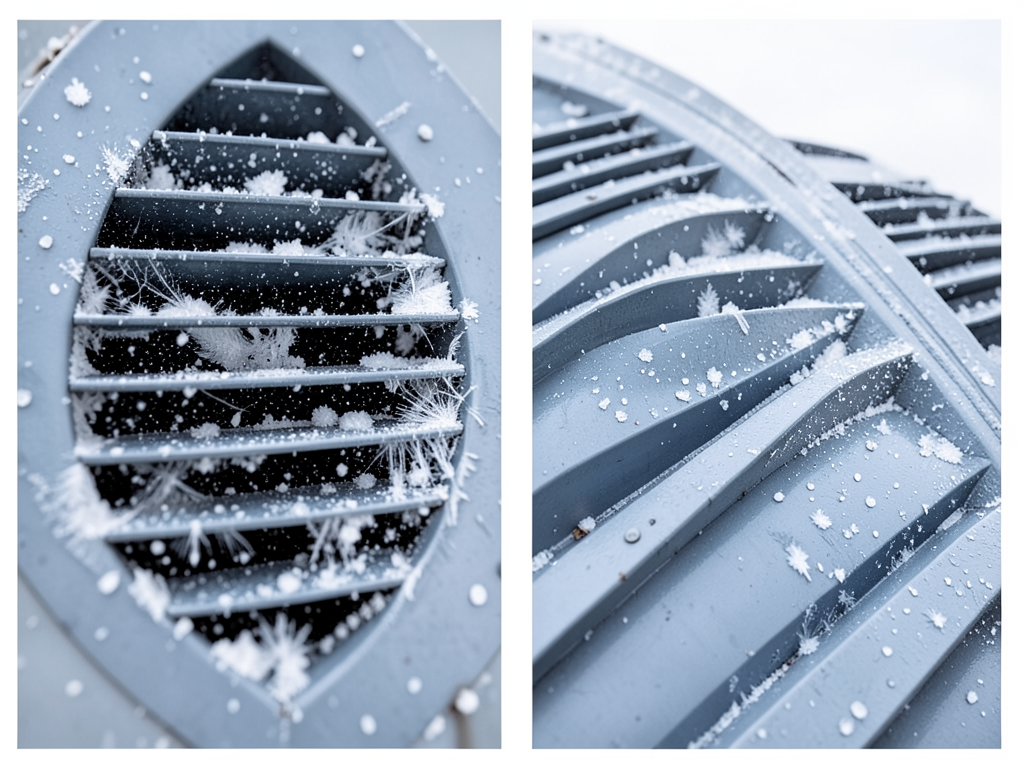
Photo showing hail damage on turbine vent fins versus undamaged ridge vent section
Installation and Code Compliance
Both ventilation systems must comply with Dallas building codes which require balanced intake and exhaust ventilation. The code mandates that for every cubic foot of exhaust ventilation there must be an equal amount of intake through soffit vents or other low intake sources.
Proper installation is critical for both systems. Turbine vents need to be installed on the back side of the roof away from prevailing winds to prevent driving rain from entering the attic. They also require a minimum 12-inch clearance from any other roof penetration to ensure proper airflow.
Ridge vents require careful sealing and integration with the roofing system. The installation involves cutting a 4-inch wide slot along the entire roof peak and installing a baffled vent system that prevents wind-driven rain from entering while allowing hot air to escape. This continuous installation means there are no weak points that can fail during severe weather. Roofing Balch Springs.
According to the International Residential Code Section R806 attic ventilation must provide net free area of at least 1/150 of the vented space. In Dallas we often exceed this minimum by 25-30% to account for our extreme summer conditions and the additional heat load from modern homes with more insulation and tighter building envelopes.
Energy Efficiency and HVAC Impact
The right ventilation system can significantly reduce your cooling costs during Dallas summers. A properly ventilated attic can lower your HVAC workload by 15-20% by reducing the amount of heat that transfers from your attic into your living space.
Wind turbine vents can provide excellent spot ventilation but their effectiveness varies throughout the day. During peak cooling hours when winds are often lightest these vents may not be moving enough air to make a significant difference. This inconsistency can lead to temperature swings that make your AC work harder to maintain comfort.
Ridge vents provide steady state ventilation that maintains more consistent attic temperatures. This stability means your HVAC system doesn’t have to constantly adjust to changing attic conditions. Over a typical Dallas summer this can translate to $200-$400 in energy savings compared to inadequate ventilation.
The combination of proper insulation and effective ventilation is crucial. Even the best ventilation system cannot overcome poor insulation. We recommend at least R-38 insulation in Dallas attics combined with your chosen ventilation method for optimal energy performance.
Making the Right Choice for Your Mesquite Home
The decision between turbine vents and ridge vents depends on several factors specific to your home and situation. Consider these key points when making your choice:
- Assess Your Roof Structure
Older homes with complex roof lines may benefit from the targeted ventilation of turbine vents in specific hot spots. Newer homes with simple roof designs are ideal candidates for ridge vent systems.
- Evaluate Your Climate Exposure
If your home is in an open area with consistent winds turbine vents can be very effective. Homes surrounded by trees or other structures may not get enough wind to justify the investment.
- Consider Long-Term Maintenance
Ridge vents require virtually no maintenance while turbine vents need periodic bearing lubrication and eventual replacement. Factor these costs into your decision. How Much a Full Roof Replacement Really Costs in the Dallas Area.
- Think About Aesthetics
Ridge vents blend seamlessly with your roofline while turbine vents are visible from the ground. If curb appeal matters to you this could influence your choice.
For most Mesquite homeowners replacing an existing roof we recommend ridge vents as the primary ventilation method. They provide consistent performance, require no maintenance, and integrate perfectly with modern roofing systems. However, in some cases we may recommend keeping existing turbine vents or adding supplemental turbine vents to address specific ventilation challenges.
Call (214) 204-2077 today to schedule your inspection. Our team will evaluate your current ventilation system and recommend the best solution for your specific home and budget.
Frequently Asked Questions
How many turbine vents do I need for my attic?
The general rule is one turbine vent for every 1,000 to 1,500 square feet of attic space. However, this varies based on your roof design, local wind patterns, and existing intake ventilation. A professional assessment can determine the optimal number for your specific situation.
Can I mix turbine vents and ridge vents on the same roof?
Yes, you can combine both systems. Many homeowners keep existing turbine vents when installing a new ridge vent system for added ventilation capacity. Just ensure the total ventilation meets code requirements and that intake vents are properly balanced with the exhaust systems.
How long do wind turbine vents typically last in Dallas weather?
With proper maintenance most turbine vents last 15-20 years in the Dallas climate. The bearings typically need lubrication annually and replacement every 5-7 years. The aluminum fins can last the full lifespan unless damaged by severe hail or debris.
Will ridge vents work during calm summer nights?
Yes, ridge vents work continuously as long as there’s a temperature difference between your attic and the outside air. They don’t require wind to function, relying instead on the natural tendency of hot air to rise. This makes them effective 24/7 unlike turbine vents which need wind to spin.
What’s the cost difference between replacing turbine vents versus installing ridge vents?
Replacing existing turbine vents typically costs $150-$300 per unit installed. Installing ridge vents on a new roof costs $3-$5 per linear foot plus installation. For a typical 2,000 square foot home the cost difference is usually $500-$800 in favor of ridge vents, not including the long-term maintenance savings.
Ready to upgrade your attic ventilation? Call (214) 204-2077 before the next storm hits. We’ll help you choose the right system to keep your Mesquite home cooler and more energy efficient all summer long.
{
“@context”: “https://schema.org”,
“@type”: “BlogPosting”,
“headline”: “Are Wind-Powered Turbine Vents Still the Best Choice for Your Mesquite Home?”,
“description”: “Compare whirlybird turbine vents to ridge vents for Mesquite homes. Learn how Dallas heat and hail affect attic ventilation performance and energy efficiency.”,
“wordCount”: 1783,
“datePublished”: “2026-05-28T11:09:00.000Z”,
“dateModified”: “2026-05-28T11:09:00.000Z”,
“inLanguage”: “en-US”,
“mainEntityOfPage”: {
“@type”: “WebPage”,
“@id”: “https://grandroofingdallas.com”
},
“publisher”: {
“@type”: “LocalBusiness”,
“name”: “Grand Roofing Dallas”,
“url”: “https://grandroofingdallas.com”
},
“author”: {
“@type”: “Organization”,
“name”: “Grand Roofing Dallas”,
“url”: “https://grandroofingdallas.com”
},
“image”: {
“@type”: “ImageObject”,
“url”: “https://grandroofingdallas.com/wp-content/uploads/2026/03/are-wind-powered-turbine-vents-still-the-best-choi-1.png”
}
}
{
“@context”: “https://schema.org”,
“@type”: “RoofingContractor”,
“name”: “Grand Roofing Dallas”,
“url”: “https://grandroofingdallas.com”,
“address”: {
“@type”: “PostalAddress”,
“addressLocality”: “Dallas”
},
“areaServed”: {
“@type”: “City”,
“name”: “Dallas”
}
}
{
“@context”: “https://schema.org”,
“@type”: “FAQPage”,
“mainEntity”: [
{
“@type”: “Question”,
“name”: “How many turbine vents do I need for my attic?”,
“acceptedAnswer”: {
“@type”: “Answer”,
“text”: “The general rule is one turbine vent for every 1,000 to 1,500 square feet of attic space. However, this varies based on your roof design, local wind patterns, and existing intake ventilation. A professional assessment can determine the optimal number for your specific situation.”
}
},
{
“@type”: “Question”,
“name”: “Can I mix turbine vents and ridge vents on the same roof?”,
“acceptedAnswer”: {
“@type”: “Answer”,
“text”: “Yes, you can combine both systems. Many homeowners keep existing turbine vents when installing a new ridge vent system for added ventilation capacity. Just ensure the total ventilation meets code requirements and that intake vents are properly balanced with the exhaust systems.”
}
},
{
“@type”: “Question”,
“name”: “How long do wind turbine vents typically last in Dallas weather?”,
“acceptedAnswer”: {
“@type”: “Answer”,
“text”: “With proper maintenance most turbine vents last 15-20 years in the Dallas climate. The bearings typically need lubrication annually and replacement every 5-7 years. The aluminum fins can last the full lifespan unless damaged by severe hail or debris.”
}
},
{
“@type”: “Question”,
“name”: “Will ridge vents work during calm summer nights?”,
“acceptedAnswer”: {
“@type”: “Answer”,
“text”: “Yes, ridge vents work continuously as long as there’s a temperature difference between your attic and the outside air. They don’t require wind to function, relying instead on the natural tendency of hot air to rise. This makes them effective 24/7 unlike turbine vents which need wind to spin.”
}
},
{
“@type”: “Question”,
“name”: “What’s the cost difference between replacing turbine vents versus installing ridge vents?”,
“acceptedAnswer”: {
“@type”: “Answer”,
“text”: “Replacing existing turbine vents typically costs $150-$300 per unit installed. Installing ridge vents on a new roof costs $3-$5 per linear foot plus installation. For a typical 2,000 square foot home the cost difference is usually $500-$800 in favor of ridge vents, not including the long-term maintenance savings.”
}
}
]
}
{
“@context”: “https://schema.org”,
“@type”: “HowTo”,
“name”: “Choosing Your Ventilation System”,
“step”: [
{
“@type”: “HowToStep”,
“position”: 1,
“name”: “Assess Your Roof Structure”,
“text”: “Older homes with complex roof lines may benefit from the targeted ventilation of turbine vents in specific hot spots. Newer homes with simple roof designs are ideal candidates for ridge vent systems.”
},
{
“@type”: “HowToStep”,
“position”: 2,
“name”: “Evaluate Your Climate Exposure”,
“text”: “If your home is in an open area with consistent winds turbine vents can be very effective. Homes surrounded by trees or other structures may not get enough wind to justify the investment.”
},
{
“@type”: “HowToStep”,
“position”: 3,
“name”: “Consider Long-Term Maintenance”,
“text”: “Ridge vents require virtually no maintenance while turbine vents need periodic bearing lubrication and eventual replacement. Factor these costs into your decision. How Much a Full Roof Replacement Really Costs in the Dallas Area.”
},
{
“@type”: “HowToStep”,
“position”: 4,
“name”: “Think About Aesthetics”,
“text”: “Ridge vents blend seamlessly with your roofline while turbine vents are visible from the ground. If curb appeal matters to you this could influence your choice.”
}
],
“image”: “https://grandroofingdallas.com/wp-content/uploads/2026/03/are-wind-powered-turbine-vents-still-the-best-choi-1.png”
}
{
“@context”: “https://schema.org”,
“@type”: “BreadcrumbList”,
“itemListElement”: [
{
“@type”: “ListItem”,
“position”: 1,
“name”: “Home”,
“item”: “https://grandroofingdallas.com”
},
{
“@type”: “ListItem”,
“position”: 2,
“name”: “Blog”,
“item”: “https://grandroofingdallas.com/blog”
},
{
“@type”: “ListItem”,
“position”: 3,
“name”: “Are Wind-Powered Turbine Vents Still the Best Choice for Your Mesquite Home?”
}
]
}
{
“@context”: “https://schema.org”,
“@type”: “Service”,
“serviceType”: “Roofing”,
“provider”: {
“@type”: “LocalBusiness”,
“name”: “Grand Roofing Dallas”,
“url”: “https://grandroofingdallas.com”
},
“areaServed”: {
“@type”: “City”,
“name”: “Dallas”
},
“description”: “Compare whirlybird turbine vents to ridge vents for Mesquite homes. Learn how Dallas heat and hail affect attic ventilation performance and energy efficiency.”
}