
How to Handle Roof Repairs When You Have a Stucco Exterior in Southlake
Southlake homes with stucco exteriors face unique challenges during roof repairs. The combination of North Texas weather extremes and stucco’s water management requirements demands specialized knowledge and techniques. This guide walks you through the critical considerations for maintaining your stucco home’s roof integrity. North Texas Climate Data.
Understanding Stucco Roof Flashing Requirements
Stucco homes require specific flashing integration that differs from traditional siding. The key is managing water flow at every transition point where the roof meets the stucco wall. Improper flashing can lead to water infiltration behind the stucco causing damage that’s often invisible until major repairs are needed.
The most critical flashing components for stucco homes include kickout flashing at roof-to-wall intersections step flashing along dormers and chimneys and counter flashing where the roof meets vertical surfaces. Each piece must work together to create a water-shedding system that protects both the roof and the stucco below.
Image: Cross-section diagram showing proper kickout flashing installation with stucco integration and water-resistive barrier layers.
Dallas Climate Impact on Stucco Roof Repairs
Southlake’s climate creates specific challenges for stucco roof repairs. The region experiences extreme temperature swings with summer heat exceeding 100°F and winter temperatures occasionally dropping below freezing. This thermal cycling causes materials to expand and contract at different rates putting stress on flashing connections.
During the summer months stucco expands more than typical roofing materials. Without proper expansion joints and flexible sealants this differential movement can crack caulking and separate flashing from the stucco surface. The intense UV radiation also degrades many sealants within just a few years requiring more frequent maintenance than homes in milder climates. The Benefits of TPO Roofing Systems for Richardson Industrial Properties.
North Texas’s heavy rainfall patterns particularly during spring storm season test the water-shedding capabilities of every roof-to-stucco transition. The region’s clay soil also contributes to foundation movement which can stress the entire structure and affect how roof flashing performs over time.
Common Stucco Roof Repair Issues in Southlake
Water intrusion remains the most frequent problem with stucco roof transitions. When kickout flashing is missing or improperly installed rainwater flows directly down the wall instead of being diverted away from the structure. This creates a perfect path for water to travel behind the stucco and into the wall cavity.
Homeowners often notice problems through interior signs before exterior damage becomes visible. Ceiling stains near exterior walls bubbling drywall or musty odors in rooms adjacent to stucco walls can all indicate flashing failures. The water may travel several feet horizontally before finding a path into the living space.
Another common issue involves the deterioration of sealants at expansion joints. The Texas heat causes many polyurethane and silicone sealants to lose flexibility and crack within 3-5 years. Once the sealant fails water can penetrate behind the stucco at these vulnerable points.
Step-by-Step Stucco Roof Repair Process
Proper stucco roof repairs follow a specific sequence to ensure long-term performance. The process begins with a thorough inspection to identify all water intrusion points and assess the extent of any existing damage. Why a Pre-Storm Roof Inspection is Vital for Every Lake Highlands Homeowner.
Before any new flashing is installed damaged stucco must be carefully removed to expose the underlying water-resistive barrier. This barrier typically building paper or synthetic house wrap must be inspected for tears or deterioration. Any compromised sections need replacement to maintain the home’s moisture protection. How Much a Full Roof Replacement Really Costs in the Dallas Area.
New kickout flashing installation requires precise integration with both the roof shingles and the stucco system. The flashing must extend far enough up the wall to direct water into the gutter system typically 4-6 inches minimum depending on roof pitch and local rainfall patterns.
After flashing installation the water-resistive barrier must be properly lapped over the flashing to maintain the shingled effect that directs water outward. This step is often overlooked but proves critical for preventing future leaks.
The final step involves reinstalling stucco or applying appropriate sealants at expansion joints. Modern polyurethane sealants formulated for Texas heat provide better longevity than standard products though they cost more initially.
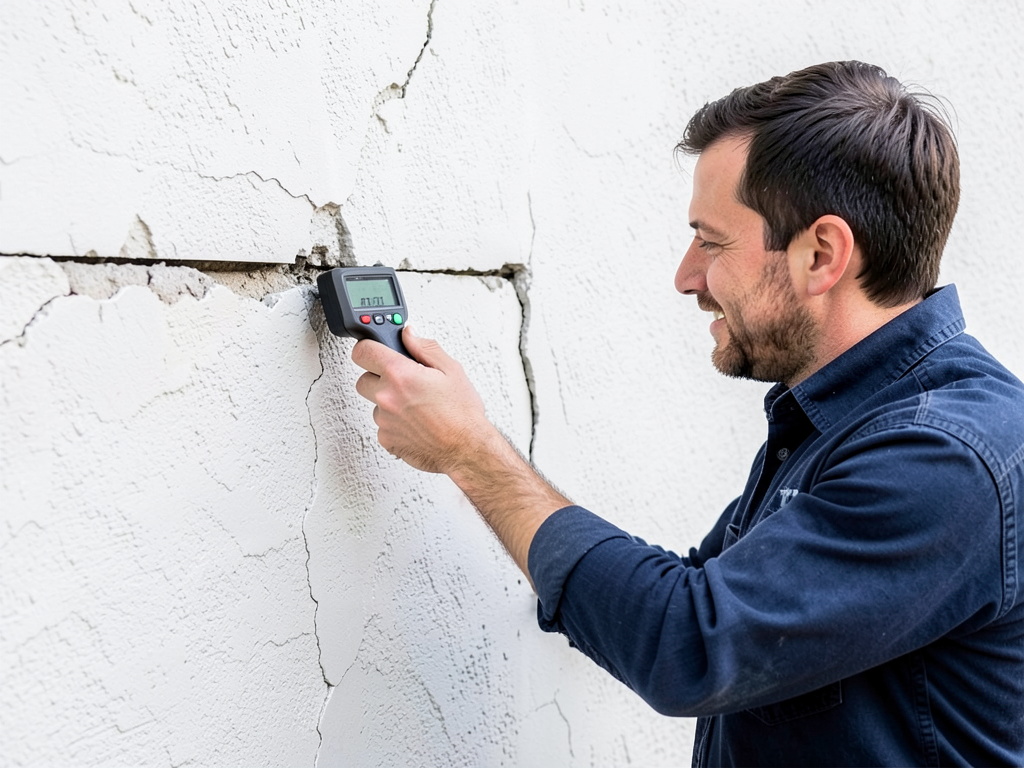
Image: Technician using moisture meter to test wall cavity behind stucco after suspected flashing failure.
Building Code Requirements for Stucco Roof Transitions
Dallas County and surrounding areas follow the International Residential Code with local amendments. Section R703.8 of the IRC specifically addresses flashing requirements for exterior plaster and stucco applications. The code mandates that flashing be installed at all wall and roof intersections with particular emphasis on kickout flashing at roof-to-wall transitions. International Residential Code Section R703.8.
Dallas County Building Code Section 1403.3 requires that all roof-to-wall flashing extend up the wall a minimum of 4 inches and terminate at a point where water cannot re-enter the wall assembly. The code also specifies that kickout flashing must be installed at all roof-to-wall intersections to divert water runoff away from the wall surface. Dallas County Building Permits.
Local building officials in Southlake typically require permits for roof repairs involving flashing replacement or stucco modifications. The inspection process verifies that flashing extends up the wall the required distance and that water-resistive barriers are properly integrated.
Material Selection for Stucco Roof Repairs
| Material Type | Cost Range | Lifespan | Best Use |
|---|---|---|---|
| Galvanized Steel | $5-8 per linear foot | 15-20 years | Standard residential applications |
| Copper | $15-25 per linear foot | 50+ years | Premium installations long-term homes |
| Aluminum | $8-12 per linear foot | 20-25 years | Budget-conscious projects |
| Stainless Steel | $12-18 per linear foot | 30-40 years | High-corrosion areas |
Choosing the right materials proves essential for long-lasting stucco roof repairs in the Dallas area. Galvanized steel flashing offers good corrosion resistance at a reasonable price point though it may eventually rust in the salty coastal air that occasionally reaches inland. Choosing Between the Most Trusted Roofing Companies in the Dallas Metroplex.
Copper flashing provides superior longevity and develops a protective patina over time. While more expensive initially copper often proves cost-effective for homeowners planning to stay in their homes long-term. The material’s natural resistance to algae and moss growth also helps maintain clean roof lines.
Aluminum flashing offers a middle ground between cost and durability. However aluminum cannot contact pressure-treated lumber or certain masonry products without galvanic corrosion occurring. This limitation makes material selection more complex in retrofit situations.
For sealants polyurethane products specifically formulated for high-temperature exposure outperform standard silicones in Texas conditions. These premium sealants maintain flexibility across a wider temperature range and resist UV degradation better than conventional options.
Cost Factors for Stucco Roof Repairs
Stucco roof repairs typically cost more than standard roof repairs due to the additional labor and materials required. The price range varies significantly based on the repair scope with simple flashing replacements starting around $1500 and comprehensive repairs exceeding $5000.
Several factors drive these costs higher. The need to carefully remove and replace stucco adds labor time compared to homes with other siding types. The specialized materials required for proper integration with stucco also cost more than standard flashing products.
Accessibility affects pricing significantly. Steep roof pitches or second-story repairs require additional safety equipment and labor increasing overall costs. Homes with complex roof lines featuring multiple valleys and dormers need more flashing pieces and installation time.
The extent of water damage discovered during repairs can dramatically impact the final price. If water has penetrated behind the stucco additional work to repair or replace damaged sheathing and framing may be necessary.
Image: Before and after comparison showing failed flashing removal and new kickout flashing installation on a Southlake stucco home.
Maintenance Tips for Stucco Roof Transitions
Regular maintenance helps prevent costly repairs to stucco roof transitions. Annual inspections during the spring allow homeowners to identify and address minor issues before they become major problems.
During inspections check all sealants at expansion joints for cracking or separation. Pay special attention to areas where different materials meet as these junctions experience the most movement and stress. Any compromised sealant should be removed and replaced with fresh material.
Clean gutters regularly to ensure proper water drainage. Clogged gutters can cause water to back up under roof shingles and find paths into the wall system through flashing gaps. This is particularly important in Southlake where oak trees drop leaves that can quickly block downspouts.
Look for signs of stucco cracking near roof lines. Hairline cracks may seem minor but can allow water penetration over time. Small cracks can be sealed with elastomeric caulk while larger cracks may indicate structural movement requiring professional assessment.
Monitor interior walls for water stains or bubbling paint especially in rooms adjacent to exterior stucco walls. These signs often appear months before exterior damage becomes visible providing an early warning system for flashing failures.
Choosing a Contractor for Stucco Roof Repairs
Not all roofing contractors have experience with stucco homes. When selecting a contractor for stucco roof repairs verify their specific experience with this siding type and request examples of similar completed projects.
Ask potential contractors about their approach to water-resistive barrier integration. A knowledgeable contractor should explain how they ensure proper lapping of building paper or house wrap over new flashing. This technical knowledge separates experienced professionals from general roofers.
Verify that the contractor understands local building code requirements for stucco applications. They should be familiar with Southlake’s permit process and willing to pull necessary permits for the work. Unpermitted work can create problems when selling your home and may void material warranties.
Request references from other stucco homeowners in the area. Speaking with past clients who had similar repairs provides insight into the contractor’s workmanship and reliability. Pay attention to how they handled any issues that arose during previous projects.
Frequently Asked Questions
How can I tell if my stucco roof flashing is failing?
Look for water stains on interior ceilings near exterior walls bubbling drywall or musty odors in rooms adjacent to stucco walls. Exterior signs include cracked or missing sealants at roof-to-wall intersections and visible rust on metal flashing components. Deciding if a Metal Roof is the Right Choice for Your North Dallas Home.
How long should stucco roof flashing last in Southlake?
Quality flashing installations should last 20-30 years with proper maintenance. However sealants at expansion joints typically need replacement every 5-7 years due to the extreme Texas heat. Regular inspections help identify issues before major failures occur.
Can I repair stucco roof flashing myself?
Simple sealant replacement around expansion joints can be a DIY project for handy homeowners. However flashing replacement and stucco repairs require specialized knowledge and tools. Improper repairs can trap water and cause more extensive damage than the original problem.
Will my homeowner’s insurance cover stucco roof repairs?
Most policies cover sudden damage from events like hail or wind. However gradual deterioration from normal wear typically isn’t covered. Some policies exclude specific stucco-related issues so review your coverage carefully and ask your agent about any limitations.
Conclusion
Stucco roof repairs in Southlake require specialized knowledge of both roofing systems and stucco integration. The combination of North Texas weather extremes and stucco’s unique water management requirements makes this work more complex than standard roof repairs.
Understanding the critical role of proper flashing recognizing early warning signs of failure and choosing experienced contractors can prevent minor issues from becoming major structural problems. Regular maintenance and prompt attention to developing issues will protect your home’s value and prevent costly water damage.
Call (214) 204-2077 today to schedule your inspection before the next storm hits. Our team specializes in stucco roof repairs and understands the unique challenges Southlake homeowners face. Don’t wait until water damage becomes visible inside your home.
- Inspect for Warning Signs
Check for water stains bubbling drywall or musty odors near exterior walls. Look for cracked sealants and rusted flashing components from the ground.
- Schedule Professional Assessment
Contact a contractor experienced with stucco homes. They should inspect both exterior flashing and interior signs of water intrusion.
- Review Repair Options
Discuss material choices repair scope and building code requirements. Understand the difference between temporary fixes and comprehensive solutions.
- Obtain Necessary Permits
Ensure your contractor pulls required permits from Southlake building officials. This protects you and ensures code compliance.
- Schedule Repairs During Dry Weather
Plan work during dry periods to prevent water intrusion during the repair process. This is especially important for extensive flashing replacements.
{
“@context”: “https://schema.org”,
“@type”: “BlogPosting”,
“headline”: “How to Handle Roof Repairs When You Have a Stucco Exterior in Southlake”,
“description”: “Expert guide to stucco roof repairs in Southlake. Learn flashing requirements, building codes, and maintenance tips for North Texas homes.”,
“wordCount”: 2058,
“datePublished”: “2026-06-09T09:13:00.000Z”,
“dateModified”: “2026-06-09T09:13:00.000Z”,
“inLanguage”: “en-US”,
“mainEntityOfPage”: {
“@type”: “WebPage”,
“@id”: “https://grandroofingdallas.com”
},
“publisher”: {
“@type”: “LocalBusiness”,
“name”: “Grand Roofing Dallas”,
“url”: “https://grandroofingdallas.com”
},
“author”: {
“@type”: “Organization”,
“name”: “Grand Roofing Dallas”,
“url”: “https://grandroofingdallas.com”
},
“image”: {
“@type”: “ImageObject”,
“url”: “https://grandroofingdallas.com/wp-content/uploads/2026/03/how-to-handle-roof-repairs-when-you-have-a-stucco-1.png”
}
}
{
“@context”: “https://schema.org”,
“@type”: “RoofingContractor”,
“name”: “Grand Roofing Dallas”,
“url”: “https://grandroofingdallas.com”,
“address”: {
“@type”: “PostalAddress”,
“addressLocality”: “Dallas”
},
“areaServed”: {
“@type”: “City”,
“name”: “Dallas”
}
}
{
“@context”: “https://schema.org”,
“@type”: “FAQPage”,
“mainEntity”: [
{
“@type”: “Question”,
“name”: “How can I tell if my stucco roof flashing is failing?”,
“acceptedAnswer”: {
“@type”: “Answer”,
“text”: “Look for water stains on interior ceilings near exterior walls bubbling drywall or musty odors in rooms adjacent to stucco walls. Exterior signs include cracked or missing sealants at roof-to-wall intersections and visible rust on metal flashing components. Deciding if a Metal Roof is the Right Choice for Your North Dallas Home.”
}
},
{
“@type”: “Question”,
“name”: “How long should stucco roof flashing last in Southlake?”,
“acceptedAnswer”: {
“@type”: “Answer”,
“text”: “Quality flashing installations should last 20-30 years with proper maintenance. However sealants at expansion joints typically need replacement every 5-7 years due to the extreme Texas heat. Regular inspections help identify issues before major failures occur.”
}
},
{
“@type”: “Question”,
“name”: “Can I repair stucco roof flashing myself?”,
“acceptedAnswer”: {
“@type”: “Answer”,
“text”: “Simple sealant replacement around expansion joints can be a DIY project for handy homeowners. However flashing replacement and stucco repairs require specialized knowledge and tools. Improper repairs can trap water and cause more extensive damage than the original problem.”
}
},
{
“@type”: “Question”,
“name”: “Will my homeowner’s insurance cover stucco roof repairs?”,
“acceptedAnswer”: {
“@type”: “Answer”,
“text”: “Most policies cover sudden damage from events like hail or wind. However gradual deterioration from normal wear typically isn’t covered. Some policies exclude specific stucco-related issues so review your coverage carefully and ask your agent about any limitations.”
}
}
]
}
{
“@context”: “https://schema.org”,
“@type”: “HowTo”,
“name”: “How to Handle Roof Repairs When You Have a Stucco Exterior”,
“step”: [
{
“@type”: “HowToStep”,
“position”: 1,
“name”: “Inspect for Warning Signs”,
“text”: “Check for water stains bubbling drywall or musty odors near exterior walls. Look for cracked sealants and rusted flashing components from the ground.”
},
{
“@type”: “HowToStep”,
“position”: 2,
“name”: “Schedule Professional Assessment”,
“text”: “Contact a contractor experienced with stucco homes. They should inspect both exterior flashing and interior signs of water intrusion.”
},
{
“@type”: “HowToStep”,
“position”: 3,
“name”: “Review Repair Options”,
“text”: “Discuss material choices repair scope and building code requirements. Understand the difference between temporary fixes and comprehensive solutions.”
},
{
“@type”: “HowToStep”,
“position”: 4,
“name”: “Obtain Necessary Permits”,
“text”: “Ensure your contractor pulls required permits from Southlake building officials. This protects you and ensures code compliance.”
},
{
“@type”: “HowToStep”,
“position”: 5,
“name”: “Schedule Repairs During Dry Weather”,
“text”: “Plan work during dry periods to prevent water intrusion during the repair process. This is especially important for extensive flashing replacements.”
}
],
“image”: “https://grandroofingdallas.com/wp-content/uploads/2026/03/how-to-handle-roof-repairs-when-you-have-a-stucco-1.png”
}
{
“@context”: “https://schema.org”,
“@type”: “BreadcrumbList”,
“itemListElement”: [
{
“@type”: “ListItem”,
“position”: 1,
“name”: “Home”,
“item”: “https://grandroofingdallas.com”
},
{
“@type”: “ListItem”,
“position”: 2,
“name”: “Blog”,
“item”: “https://grandroofingdallas.com/blog”
},
{
“@type”: “ListItem”,
“position”: 3,
“name”: “How to Handle Roof Repairs When You Have a Stucco Exterior in Southlake”
}
]
}
{
“@context”: “https://schema.org”,
“@type”: “Service”,
“serviceType”: “Roofing”,
“provider”: {
“@type”: “LocalBusiness”,
“name”: “Grand Roofing Dallas”,
“url”: “https://grandroofingdallas.com”
},
“areaServed”: {
“@type”: “City”,
“name”: “Dallas”
},
“description”: “Expert guide to stucco roof repairs in Southlake. Learn flashing requirements, building codes, and maintenance tips for North Texas homes.”
}